Total Pageviews

Sunday, September 10, 2017

EDSD 7082 Creating a Positive Emotional Climate in an Elementary School Classroom

Creating a Positive Emotional Climate in an Elementary School Classroom
The purpose of the study is to identify what a successful classroom management system is and how teachers create successful learning environment and a positive emotional climate for learning.  The literature revealed that classroom management is instrumental in establishing a climate for learning that is positive for children.  A negative learning environment is detrimental to a students’ learning needs in the classroom. The study is qualitative in design using interviews.  The participants included elementary teachers at a school near San Francisco.  One of the most important aspects of a classroom is the positive climate.  Teachers in the study had different management systems.  Some are run well and students seem happy and are thriving in their environment.  Other classrooms did not seem as happy and were not thriving on the same level.  They were somewhat negative.  An effective classroom for learning has a positive classroom climate, which in the 21st century is more important than classroom management itself.  Teachers learn specified management practice to provide an effective learning environment for their students. 
What are effective elementary teacher’s strategies for creating a positive emotional climate in the classroom? It is important for teachers to find success in creating a positive classroom climate.  Classroom climate is important in creating a supportive environment for students to learn. 
Baer and Bandura (1963) Social Learning theory suggests that people modify their behavior based on the observation and modeling of other people’s behaviors. The results of this study expressed that a child’s behaviors can be influenced by an adult’s pattern of behavior through imitation. A child with reinforcement of such behavior can maintain this behavior.
Swafford, Bailey and Beasley (2014) reveal six components of a positive learning environment that include security, shelter, social contact, symbolic identification, task instrumentality, pleasure. The author explains that why it may be hard for teachers, both new and seasoned, may have trouble incorporating these into their classroom. All students have different learning styles and various needs that may make it difficult to give students the individual attention, while creating an all-around positive climate in the classroom.
Hoffman, Hutchinson and Reiss (2009) collected data from a survey on the importance of teacher knowledge in creating a positive classroom climate. This author of this study urges teachers to advocate for training in behavior management, especially focused on motivating students in improving their behavior, linking it to continued learning. Data indicated that there is a link between positive classroom climate and teacher background knowledge and training in the areas of classroom management and strategies to promote a positive climate.
Committee for Children (2014) focused on key factors for creating a positive climate in the classroom. The authors provided three aspects of creating a positive climate, displayed in a pie chart. The three aspects include, developing and reinforcing classroom rules and norms, promoting positive peer relationships, and nurturing positive relationships with all students.
Harris and Lowery (2002) discuss data collected from a survey of 123 teachers who were enrolled in a principal preparation program. This survey was conducted to seek insight into behaviors participants thought were the most valuable behaviors for a principal to encourage teacher to use in creating a positive school climate. Three themes were identified as follows: respecting students, communicating with students, and supporting students.
Weinstein, Curran and Tomlinson-Clarke (2003) focus on Culturally Responsive Classroom Management (CRCM) to better understand diverse student populations in each classroom. The purpose of this article is to help teachers strengthen their ability to manage a diverse classroom and teach specific strategies for creating culturally responsive classroom management. They offer six strategies which include: creating a physical setting that supports academic and social goals, establishing expectations for behavior, communicating with students in culturally consistent ways, developing a caring classroom environment, working with families, and using appropriate interventions to assist students with behavior problems.
Related Research for Creating a Positive Emotional Climate in an Elementary School Classroom:
Jennings and Greenberg (2009) focused on a model that includes the importance of teachers’ social and emotional competence (SEC), student and teacher relationships, effective classroom management, and program implementation. The authors explained that the components of this model contribute to creating a positive classroom climate. The authors then discuss research they conducted on the relationship between SEC and teacher burnout. This includes developing stress reduction to support teachers. Kearney and Peters (2013) collected data through a survey of students and teachers on attitude about classroom. The authors suggested that it is important for teachers to think about the students and their attitudes in the class. Kipps-Vaughan, Ponsart and Gilligan (2012) consider human factors in teachers, by looking at their needs and focusing on stress and its effect on learning environments. When people in a school experience a great deal, it is important for school leaders to establish stress management opportunities for teachers and students. Leflot, van Lier, Onghena and Colpin (2010) focused on preventative measures in behavior management. The purpose of this study was to see how teachers in elementary school classrooms use behavior management to address reducing disruptive, by using a universal classroom preventative intervention. The study focuses on students with developing signs of oppositional and hyperactive behavior, which are linked to other problems such as social or learning problems. Pianta, Belsky, Houts and Morrison (2007) measured opportunities to learn in a classroom, looking at the quantity and quality of classroom instruction. Results were gathered by visiting and observing 2500 classrooms throughout 10 cities. The results of this study revealed that even though the climate may seem positive in a classroom, there was not consistent instructional support. The researchers discussed the need to design a plan to observe teacher instructional skills, and also provide teacher-training interventions. Self- Brown and Mathews (2003) found evaluation approaches to assess student achievement, goal orientation and how they influence classroom structure, specifically in mathematics. The results indicated that specific types of classroom evaluation structure influences student achievement goals. Students under the contingency contract condition set significantly more learning goals compared to students without contingency contracts. Students under token economy conditions set more performance goals than learning goals. The authors conclude that in the classroom, a structure that emphasizes the importance of individual goals and efforts show that learning goals become more important to students. The results can lead to many positive effects such as ability, self-competence and motivation to stay on task. Tetler and Baltzer (2011) examined inclusion classroom setting for students with disabilities and their attitude towards such a learning environment. The author looked at various degrees of classroom environment including attitudes of other students. Although this study is specific towards inclusion, the author does provide various charts in his study that provide insight into the various aspects of what a positive classroom climate should possess.
Based on this research and the various types of classroom strategies for positive classroom management and climate, I know the importance of the positivity in the elementary classroom.  It is important for positive reinforcement and discipline, class meetings and dialogue, and brain breaks.  The most important thing is that teachers are able to create a positive emotional climate in their classroom using strategies that work.  I intend to do this daily in my kindergarten classroom.


Good, Nicole, "Creating a Positive Emotional Climate in an lementary School Classroom" (2015). Master's Theses and Capstone Projects. 186. http://scholar.dominican.edu/masters-theses/186

Wednesday, May 10, 2017

EDSD 7081 Week 11 Blog

Over the years during my teaching career, I have taught several students that were deaf.  One of these students had a cochlear implant and one did not.  I truly enjoyed learning sign language and seeing these students read lips.  The child with the implant had a greater advantage of learning to hear and speak appropriately than the child that did not have one.  These students received speech services, sign language, and had an interpreter to help with instruction.  I loved watching their interaction with one another.  During the beginning of the year they had a hard time getting adjusted to the norms of kindergarten and seemed lost.  As the year progressed, they became more comfortable and would write words for communication.  They would also point in the classroom so that their peers understood them.  This was quite an experience for me, them, and the other students in my class.  This course has deepened my perspective on the services that should be offered to hearing impaired and bilingual students.  The Major Assessment Project that I did was based on a Hispanic child that I taught several years ago.  Through research, I found numerous ways to help him with language and literacy development and his parents, too.  One way that I want to try in the future would be to provide multiple experiences for language use.  Colorincolorado.org offered strategies to be used for English Language Learners. 
5 Classroom Strategies: Language
Provide explicit, systematic instruction in vocabulary.
Children require multiple exposures to words in order to develop a rich understanding of their meaning and use. Teachers should make a point of introducing interesting new words for children to use.
  • Presenting vocabulary thematically helps children make associations between words and scaffolds students' learning
  • Read-alouds that include explanations of targeted vocabulary can support word learning Ensure that ELLs have ample opportunities to talk with both adults and peers and provide ongoing feedback and encouragement.
English language learners need lots of opportunities to engage in social interactions with other children and adults. For group activities, pair English language learners with children who have strong English language skills, and make sure that all the children who speak the same home language (L1) are not grouped together
Provide opportunities for self-directed activities so that ELLs can choose activities that match both their interests and their language abilities
Encourage child talk by providing prompts when children need help in expressing themselves
Use open questions, or questions that can have multiple answers, to help ELLs expand their own utterances
Expose ELLs to rich language input.
Exposure to rich language, whether through shared book reading or through teacher talk, has been shown to enhance children's oral language development
One effective strategy is for the teacher to provide an ongoing commentary on activities that are taking place in the classroom in order to expose children to language associated with the immediate context
Structure the classroom space and routine to provide scaffolding for ELLs' language learning.
Arrange the classroom in a way that supports each type of instructional activity that will take place, and then keep changes to the physical environment to a minimum. Once ELLs learn which activities take place in various parts of the classroom (e.g., centers, circle), the physical environment will cue them as to what they are to do and how they are to behave in that area
Predictable classroom routines can also provide scaffolding for English language learners by allowing them to anticipate what will happen each day, including the type of language they will need for each activity
Encourage continued L1 language development.
Strong L1 skills support both language and literacy learning in English:
  • Encourage parents to talk and read to their children in their home language as a way of strengthening children's L1 language skills.
  • Incorporate children's home language in the classroom when possible. Songs and videos can be used effectively for this purpose if teachers do not speak their students' language

These strategies would definitely help me when planning instruction for English Language Learners.  This would also teach me things that would be beneficial.  In the future, I want to continue learning ways to teaching bilingual students.  I find this very interesting and want these students to build a strong foundation and master their skills in kindergarten. This will help me be a scholar of change when reaching these students. 

Tuesday, April 4, 2017

EDSD 7081 Week 6 Blog Catherine Thompson

Week 6 Blog Attachment & Additional Resources

Learning language and literacy in a second language is a complex process that involves a variety of skills and abilities. Children need to be able apply their existing knowledge and experiences to communicate and understand different reading tasks. Literacy is one of the most important academic skill areas and because of this, it influences language development and all other areas of academics.  Nearly one in 4 children in the United States is Hispanic and more than one in 5 comes from a home where a language other than English is spoken and for the vast majority it is Spanish. (Figureas-Daniel & Barnett, 2013).

Introduction: My Child in Context

Edgen is a 9-year-old Hispanic male who was born in the United States to an illegal Hispanic mother and father.  He has been exposed to very little English in the home since birth.  Edgen began school at the age of 3 and is now in third grade.  He has struggled in all areas of academics due to the language barrier and parental support in the home.  The focus of this study will be on language and literacy skills and the growing consensus that early childhood is a critical time for language and literacy learning because of phonological awareness, letter word recognition, writing and spelling skills, and oral language abilities- the foundational skills for monolingual children’s ability to read and write.  
(Paez, Tabors, and Lopez, 2007) This study will be about his life and the development of language and literacy from birth until currently at age 9.

Home Life and family:

Edgen  is a healthy 9-year-old male who lives at home with his biological parents, 2 older sisters, and a dog in a small rural town in southwest Georgia.  Edgen was born at 36 weeks’ gestation weighing 5lb 3 oz.  According to his mother, she was on bedrest leading up to his birth with high blood pressure and gestational diabetes.  Post-delivery was successful, whereas he was released from the hospital with his mother 3 days after birth.  The only medical condition he has had since birth is ear infections and asthma.  He sees the doctor a lot during winter months and he also has seasonal allergies.  His father is the primary caregiver and the closest parent to him.  His mother tends to be the closest to his older sisters.  His mother is in the home the most with him because his father works a lot in the fields and travels for work in order to provide for the family.  During their spare time and when the father is not working, which is mainly on Sunday, they enjoy going to the park, shopping, cooking, and watching TV together.  The father likes to take them shopping to buy ingredients to cook authentic meals and clothes for school.  This helps him feel successful with parenting since he is not at home most of the time. 

Community and culture, including language spoken:
            Edgen is a loving, shy, and caring, 9-year-old Hispanic male who is very eager to please his teachers, peers, and family.  His shyness often leads to emotional distress and frustration.  The reasons for distress are that he has limited English in the home and the only time he is fully exposed is when he is at school.  He was born in the United States to Hispanic parents who do not speak fluent English.  His father speaks more English than his mother, but still very hard to communicate with.  Sensitive parenting has been linked with positive child outcomes, including early language knowledge and literacy development. (Pungello, Iruka, Dotterer, Mills-Koonce, and Reznick, 2009) In the small, rural community where they live, there is a compound of Hispanic families that live, work, and interact together daily.  When Edgen is not at school, he is communicating with Spanish.  His family feels the most comfortable when they are around other Spanish speaking families.  They feel confident and the most adequate this way.  The environment in which children develop consists of four interrelated systems: immediate settings such as home and school, relationships among the settings, neighborhoods and the community that have indirect impact, and the culture of the environment in which the children are reared. (Hammer, 2002).  The mother and father want to learn English but do not have the courage to receive classes.  Edgen’s mother is very introverted and his father is work driven and oriented to provide.  Socioeconomic status affects a variety of mental and physical health outcomes, such as language development, which also connects poverty with parental emotional distress that affects parenting and the focus on basic needs being met. (Perkins, Finegood, and Swain, 2013)   Edgen’s father says that it is not his priority to learn English.  His priority is to earn money so that he can provide.  Infants born prematurely have lower birth weights, a measure associated with a range of brain differences compared to full-term babies, which may help explain language effects. (Perkins, Finegood, and Swain, 2013). The children are very limited to language/literacy-rich experiences in the home.  This deficit is primarily because of the parents’ lack of language.  The older siblings do, however, read books to their little brother and practice the alphabet.  It is possible that genetic factors play a role in the acquisition of language and the linguistic proficiency of language-impaired people because different genetic factors affect the linguistic abilities of language-impaired and normal people. (Stromswald, n.d.)

My Child’s Language and Literacy Development Journey: Developmental Characteristics

Preschoolers
            When Edgen began pre-kindergarten, he was extremely introverted and had a difficult time transitioning.  He was placed in an inclusion classroom with a 4:21 ratio.  In the inclusion setting, he was placed in small groups that would receive additional support for all academic areas.  He was also pulled out for interventions for speech and language development.  His teachers knew that there were potential delays due to language barrier and home environment.  Just like statistics indicate, Edgen is at a deficit in all academic areas because of his language barrier.  Children from homes in which a language other than English is the primary language are at risk for poor reading outcomes (Hammer, Lawrence, & Miccio, p. 237, 2007).  He was below grade level norms in receptive, expressive, and oral language.  He was also at a deficit on prekindergarten skills on the screener given to all four-year old’s entering school.  Even though he had a year of school prior to pre-kindergarten, he was evaluated at school using the English norms and standards for learning.  He was given a score on phonological awareness, expressive vocabulary, letter-word recognition, and concepts of print.  He also had to orally retell stories and recall what happened in the story.  Researchers found that children’s English letter-word identification abilities and Spanish expressive vocabulary predicted Spanish letter-word identification abilities.  (Hammer, et al, p. 238, 2007)
Learning to read is a process and it can be a complex task if a child is monolingual much less bilingual and having learning delays.  The complexity increases when a child’s home language differs from that of the school and when the child comes from a home with limited academic and economic resources.  Edgen’s home learning environment was mainly Spanish other than his older sisters.  His parents’ English skills were very broken and hard to understand; therefore, they could not teach him effectively.  Typically, children are exposed to language acquisition opportunities in the home that help reinforce what has been taught at school.  For Edgen Tolentino this was not the case.  The process of learning to read, however, is more multifaceted when children’s primary language is different from the oral and written language they encounter at school.  (Hammer & Miccio, p. 1, 2015).  Spanish speaking children have disadvantages when their home life is challenged and they do not have access to academic materials. 
Over the summer between the three- year- old full day program and pre-kindergarten, Edgen attended a four-week summer session.  During these sessions, his interventions consisted of English letters and sounds, vocabulary acquisition with simple everyday/common terms- such as, boy, girl, mom, dad, colors, numbers, labels in the classroom and bathroom, and the terms of the school environment around him.  He was also encouraged to say his peers’ names.  This was to enhance his social skills and the general learning skills of pre-kindergarten.  The teachers and interventionists developed a Response to Intervention during the first twelve weeks of school.  These skills and goals consisted of: recognition of letters in his first name, count to 5, colors, and verbalization of his teachers and peers’ names.  Children with limited proficiency in the language of schooling are certain to experience increased difficulty in coping both academically and socially, and it is important to identify these difficulties to understand what intervention or remedial approaches are needed (Bialystok, 2008).  He began these interventions immediately, 5 days a week for 10 minutes a day.  According to the data recorded by the teacher and interventionist, Edgen could only recognize the letter E in his name, and he could count to 5.  During this process, he was progressed monitored every 2 weeks for a total of 6 weeks.  The team met again and determined that the interventions should continue for another 6 weeks.  This continued for a total of 18 weeks and a student support team meeting was scheduled to discuss progress and to determine if Edgen needed psychological testing.  At the end of the 18 weeks, the teachers, parents, interventionist, ESOL teacher, speech pathologist, and interpreter reviewed progress based on the data and determined that he scored significantly below the norm.  The recommendation was made for psychological testing and a visit to his pediatrician.  His parents had to have an advocate shadow them so that they would understand and get his needs met.  During testing, which can be difficult because of the bilingualism, clinicians have to accurately assess a bilingual child’s problematic and unproblematic abilities in terms of sounds, words, grammar, and conversation in each language, evaluate if there is a delay, weigh the child’s linguistic/cognitive capacities in comparison to typically and atypical, developing monolingual children, and bilingual children of the same age, and finally develop an effective intervention that targets subareas of linguistic and cognitive competence in one or both languages (Heinlein & Williams, 2013).  After testing was complete and eligibility was determined, Edgen was served the remainder of his pre-kindergarten year by a regular education, special education, 2 support teachers, speech, ESOL, and an interventionist.  He qualified and received a multitude of services so that he would be able to reach his full potential.  Goals were set, accommodations, and modifications were made, based on the testing. 
           
Questions for colleagues:
  • What are additional interventions for bilingual preschoolers?
  • What baseline assessment do you use in your school district for these students?
  • What progress monitoring tool do you use in your school district?
  • What accommodations and modifications do you put in place?
  • What resources do you have for the parents of this child? 

References
Bialystok, E.L. (2008). Second-Language Acquisition and Bilingualism at an Early Age and the Impact on Early Cognitive Development.  Encyclopedia on Early Childhood Development.  Retrieved from: sww.child-encyclopedia.com/sites/default/files/textes-experts/en/614/second-language-acquisition-and-bilingualism-at-an-early-age-and-the-impact-on-early-cognitive-development.pdf

Hammer, C.C., Lawrence, F.R., & Miccio, A.W. (2007). Bilingual children’s language abilities and early reading outcomes in head start and kindergarten.  American Speech-Language-Hearning Association. 38. 237-248. Retrieved from: https://www.ncbi.nlm.nih.gov/pmc/articles/PMC4590989/

Hammer, C.S., & Miccio, A.W. (2006). Early language and reading development of bilingual preschoolers from low-income families. Top Lang Disord. 26(4): 322-337. Retrieved from: https://www.ncbi.nlm.nih.gov/pmc/articles/PMC4586031/pdf/nihms429984.pdf

Hart, B. & Risley, T.R. (2003). The early catastrophe: The 30 million word gap by age 3.  Retrieved from http://www.aft.org/ae/spring2003/hart_risley                                                             

Fierro-Cobas, V. & Chan, E. (2001). Language development in bilingual children: a primer for pediatricians.  Contemporary Pediatrics. 18(7), p. 79-98.  Retrieved from: http://courses.washington.edu/sop/Bilingualism_PrimerPediatricians.pdf 

Figureas-Daniel, A. & Barnett, W.S. (2013). Preparing young Hispanic dual language learners for a knowledgeable economy. Preschool policy brief: 24. Retrieved from: http://nieer.org/wp-content/uploads/2016/08/Dual20Language20Learners.pdf

Hammer, C.S. (2002). The environment and language impairment in children: implications for assessment and intervention.  Argang 80. Retrieved from: https://www.idunn.no/spesped/2002/02-03/the_environment_and_language_impairment_in_children_implications_for_assess

Michael-Luna, S. (November 2015). What parents have to teache us about their dual language children.  Young Children.  National Association of Educating Young Children.  P. 42-43. Retrieved from: http://www.naeyc.org/yc/files/yc/Dual%20Language%20Children.pdf

Paex, M.M., Tabors, P.O., Lopez, L.M. (2007). Dual language and literacy development of Spanish-speaking preschool children. J Appl Dev Psychol.28(2): 85-102. Doi: 10.1016/j.appdev.2006.12.007. Retrieved from:  https://www.ncbi.nlm.nih.gov/pmc/articles/PMC3524578/

Pence Turnbull, K. L., & Justice, L. M. (2017). Language development from theory to          practice (3rd ed.). Upper Saddle River, NJ: Pearson, Inc.

Chapter 5, “Infancy: Let the Language Achievements Begin” (pp. 122-157)

Sunday, February 12, 2017

EDSD 7080 Module 4 Assignment 1

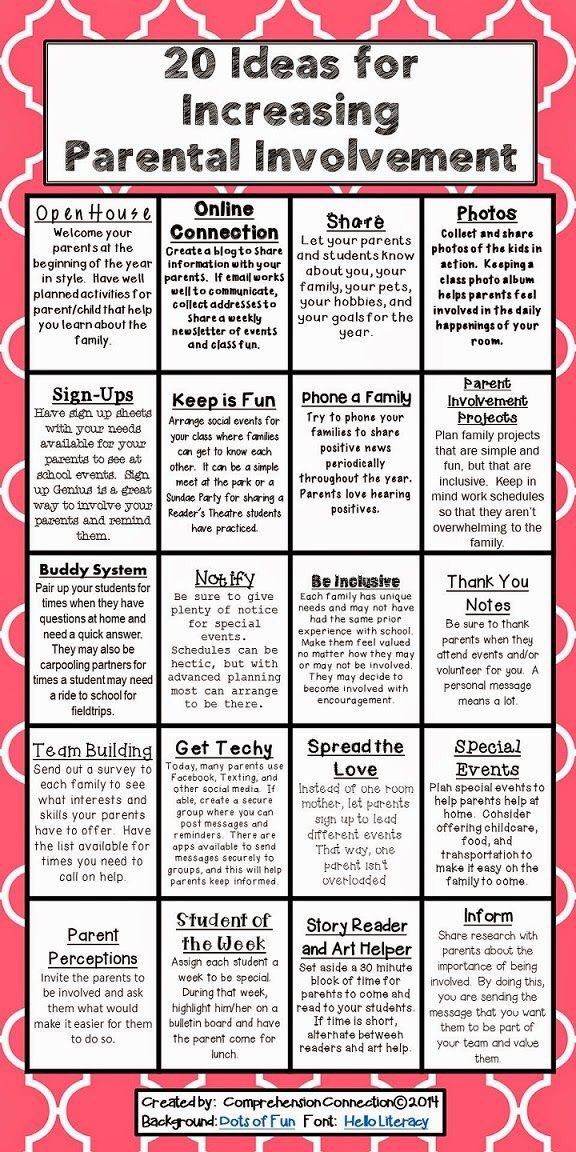
As I review the topics presented this quarter in class, I have questions about parent involvement and how we can improve it, Collaboration with colleagues and how to arrange ample time for this during the school day, and different approaches to language and literacy development during the early years.  All areas are extremely important to me and I want to find ways to improve them all.  Parent Involvement can be very stressful when parents don’t seem to care what is happening at school.  The parents who don’t care are usually the ones whose children are struggling in all areas of academics, social interaction, behavior, etc.  How can we change this? By creating positive social change, I can become a change agent for parent involvement by offering rewards to parents and being specific with their individual needs.  Yes, this would be costly, but I could reach out and possibly get donations from community stakeholders.  Another area that raises interest is collaboration among grade level colleagues.  This is difficult to accomplish during the school day because of classroom coverage.  How can we make it happen and be effective? Collaboration is another area that comes to mind.  Collaboration among teachers paves the way for the spread of effective teaching practices, improved outcomes for the students they teach, and the retention of the most accomplished teachers in high-needs schools (Berry, Daughtery, Wiedner, 2009). Other than have a 25 minute common planning time daily, how else could we collaborate for a longer period of time? Could we utilize parent volunteers?  I would love to develop a plan to see this take place at least once a month for teachers in a grade level.  This would help teachers gain new insight and ideas and would also help older teachers who are not willing to change their thinking.  Hopefully, this would be a positive social change in the way teachers plan for instruction. 
Strengths-based Learning is an area that I want to explore further.  A strength-based approach emphasizes the strengths and capabilities of the whole child.  When teachers use this approach, they recognize the child’s strengths and see how they cope and deal with adversity. This takes focus off of just the problems the child is having.  I want to also be a positive social change agent and change the way I have done things for so many years by focusing on the weaknesses instead of the strengths.  I want to pull out the positive in all of my children and their families. Attachment is another area that I want to learn more about.  I have been looking into my students’ history and can see which ones did not have attachment with a caregiver at birth.  I want to help improve this in the community by offering classes to young mothers. 

Recommended resources from colleagues would be literacy development techniques and what is best for young children.  Teaching language and literacy beginning before birth is important.  Children need a rich literate environment and need to be talked to in language they can understand beginning early on.  A resource that I found helpful is the website: Raising Children.net http://raisingchildren.net.au/articles/activities_to_promote_literacy.html  This website has activities and ideas to develop literacy at all ages. 
Information that I found to share with colleagues about parent collaboration would be Project Appleseed.  This organization has numerous ways to form a parent involvement group or PTA within the school.  Information can be found at: https://pbs.twimg.com/media/CmpkmgWXEAAXNwW.jpg:large

Effect of Positive Social Change
Child development is critical in the early years so that students will learn and grow and be able to compete in a global society. As an agent of positive social change, I have a strong vision of providing all of my students a strengths-based approach to learning and help them be resilient to any form of adversity.  By studying and understanding all areas of child development, I will be able to provide this for all students who enter my classroom.  I also want to share this information with other colleagues in my school, who also work with pre-kindergarten and kindergarten aged students.  Being a change agent in education is a passion of mine and I will do what it takes to accomplish this goal.

Reference:

Berry, B., Daughtery, A., Wiedner, A. (December, 2009). Collaboration: Closing the Effective Teaching Gap. CTQ Center for Teaching Quality, p. 1-10. Retrieved from: http://www.teachingquality.org/sites/default/files/Collaboration-%20Closing%20the%20Effective%20Teaching%20Gap%20(February%202010)_0.pdf

Friday, January 20, 2017

100th Day of School

Hip Hip Hooray
We celebrated the 100th Day!!

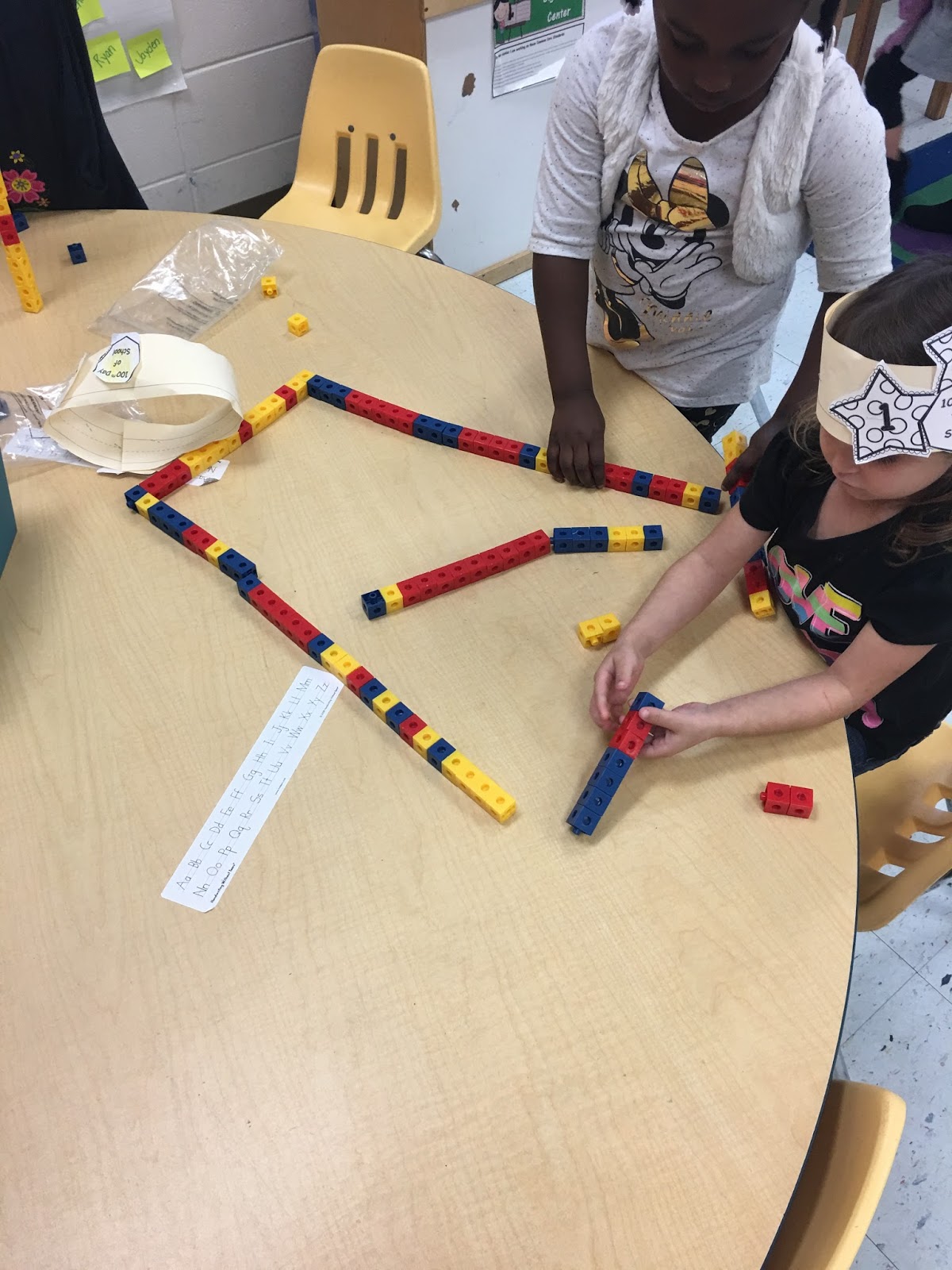
I had all of our activities centered around the 100th day of school celebration.  We wrote about being 100, counted to 100, made cup towers with 100 cups, built a 100 cube train, and sorted our 100 objects from home. We were everything 100 at school today! It was fun!!


Thursday, January 19, 2017

Winter is here! Oh, wait~ not really in south GA. We are still having 80 degree weather.  Even though we don't get the true feel of winter and get to see snow, we pretend that it is cold outside.  We simply improvise! ⛄   Our classroom has been turned into a winter wonderland. 


🎉🎉  Happy New Year!!  🎉🎉

I changed an area in my classroom to a New Year's Party. We had the works- blowers, beads, boas, masks, anything party! Our resolutions are to learn how to read in 2017.  


Snowmen, Mittens, and Snowflakes, Oh my! 

I had a hot chocolate station, a weather station, snow in the science area, winter words in the writing area, snowflakes to decorate in the art area, and winter stories with QR codes. We have learned so much about winter! I got the winter word cards from DeeDee Wills at mrswillskindergarten.  


Hibernation and Migration


I have to share a picture of my grandbaby, Kaiden.  I love spending my time on the weekend with him! 😍 He is getting ready to crawl any day. I have also been spending my time at our farm getting ready to build a house.  We just took down an old house and barn that were falling down. Now we are in the process of cleaning up! My life is pretty busy beyond my classroom and getting my EdS degree! Enough about me. . . 


Penguins and Polar Animals
I taught my kiddos about polar animals and what it means to live in the Arctic.  They loved learning animal facts! 


100th Day Hooray!!!

We are celebrating our 100th day of school tomorrow.  I have set stations set up and ready to go.  It is hard to believe we only have 80 days left of the school year. 


Friday, December 30, 2016

Strengths-based Practice in Education

Adopting a strengths-based perspective of education is a perspective that I feel very strongly about.  In education, I want to work with families to get the best overall help and care that they need for their family.  According to Pattoni, (2012) “strengths-based practice is a collaborative process between the person supported by services and those supporting them, allowing them to work together to determine an outcome that draws on the person's strengths and assets (p.4). The standards of practice are:
1.    Goal orientation: Strengths-based practice is goal oriented. The central and most crucial element of any approach is the extent to which people themselves set goals they would like to achieve in their lives.
2.    Strengths assessment: The primary focus is not on problems or deficits, and the individual is supported to recognize the inherent resources they have at their disposal which they can use to counteract any difficulty or condition.
3.    Resources from the environment: Strengths proponents believe that in every environment there are individuals, associations, groups and institutions who have something to give, that others may find useful, and that it may be the practitioner's role to enable links to these resources.
4.    Explicit methods are used for identifying client and environmental strengths for goal attainment: These methods will be different for each of the strengths-based approaches. For example, in solution-focused therapy clients will be assisted to set goals before the identification of strengths, whilst in strengths-based case management, individuals will go through a specific 'strengths assessment'.
5.    The relationship is hope-inducing: A strengths-based approach aims to increase the hopefulness of the client. Further, hope can be realized through strengthened relationships with people, communities and culture.
6.    Meaningful choice: Strengths proponents highlight a collaborative stance where people are experts in their own lives and the practitioner's role is to increase and explain choices and encourage people to make their own decisions and informed choices. (Pattoni, 2012, p.5)
As an early childhood educator, I want to be an advocate of strengths-based approaches to learning with my students and their families.  The literature, as stated in Pattoni’s work (2012), states that, “personal strengths are associated with academic success, self-determination, and life success” (p.10). I want everyone involved to benefit.  I want parents to feel successful when they get the help that is needed and feel like they are capable parents.  I also want my students to reach their full potential. 
Strengths-based practice is important to me because I have had to deal with different networks in the past to get adequate food, clothing, shelter, and mental care for families.  When a person doesn’t have anywhere to go, they have no idea who to turn to.  I had to reach out and help in any way possible.  I wanted what was best for my student and his family.  I reached out to the Department of Family and Children Services, the Housing Authority, the local Food Bank, and the Mental Health Agency getting the materials that the mother needed in order to be a successful parent.  The network of people involved were very helpful, and the mother was grateful and appreciative.  The students school success changed dramatically after everything was in place.  It was extremely rewarding!
Questions of calls for support from colleagues:
·        What agencies would you call on?
·        Do you think strengths-based practice is appropriate?
·        How would you help families? To what extent?


References
Pattoni, L. (2012). Strengths-based approaches for working with individuals. Retrieved from https://www.iriss.org.uk/sites/default/files/iriss-insight-16.pdf